
The Augments 10 Years Ago, The Road so far and, The Prospects at the Dawn of a New Millennium
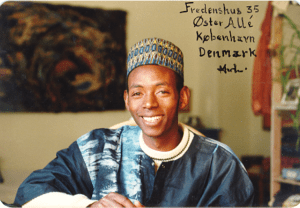
Nuhu Salihu Jafaru, KPH, 1995; is one of the founding general secretaries of MBOSCUDA and has been monitoring its development and growth both as a social movement as well as an NGO since.
Acknowledgements: This project grow out of a simple request from Michaela Pelican (a researcher on internship with MBOSCUDA) to commit what I have told her verbally about MBOSCUDA’s history, on paper. Since then I have had many more requests. “Nuhu, could you please write for me something on the relationship that the Mbororo have with their cattle?” “Why have the people Mbororo been unwilling to send their children to school? Etc etc. I found myself writing paper after paper, the result of which today is what you have in your hands. Before now, I have not had any intention of compiling these pieces into one. But again there are requests and I found myself revisiting the debates of ten years ago! “Some of these things you talk about Nuhu, you could put them down on paper, you know”. I hope this exercise will contribute positively to the development and evolution of MBOSCUDA as an organisation. It is a bit of a “revolution” because, with hindsight wisdom we all realise that is exactly what we set out to achieve without being fully aware. In the words of one of my friends who once captured our “handicap” in working for “Mbororo development”, in this telling paradox of our (escapist?) nomadism;
If we had not started this already, we had better not start it at all!
Even though I appreciate the wisdom of his words, I still think that it is well we started it… We are better for having started! What I have tried to recollect here is just one version of the story (perhaps my own version). I guess every one of us has a beautiful story to tell! And until we put it all together, we have not really heard the last of it! I hope that this first step (certainly not the only one, nor the most authoritative!) will trigger action and add to driving the revolution in the right direction. I also hope I have not in anyway misrepresented the issues or people here quoted. I acknowledged any shortcomings of this project to be mine (alone) and would welcome any feedback or inputs. I have to the best of my ability tried to relate each article, saying or happening to the author(s) or actor(s) but as this is not an academic treatise, I have as far as possible tried to maintain an eye for the “revolution” and not the people behind the revolution. I have no intention to create heroes. I personally believe that MBOSCUDA is the revolution of the Mbororo people and all of us are merely contributors (in our own individual ways and means) to that process. At a very personal level working for MBOSCUDA has always been an intense interplay of contradictions for me. A search for self-definition, self-expression, self-determination. At times very exciting, at other times very very frustrating. But never boring! This project mirrors that subjectivity. And I see myself as a subjective actor in this and not the objective historian of such a process.
Nuhu Salihu Jafaru
Bamenda, October 11, 1999
CONCEPTION
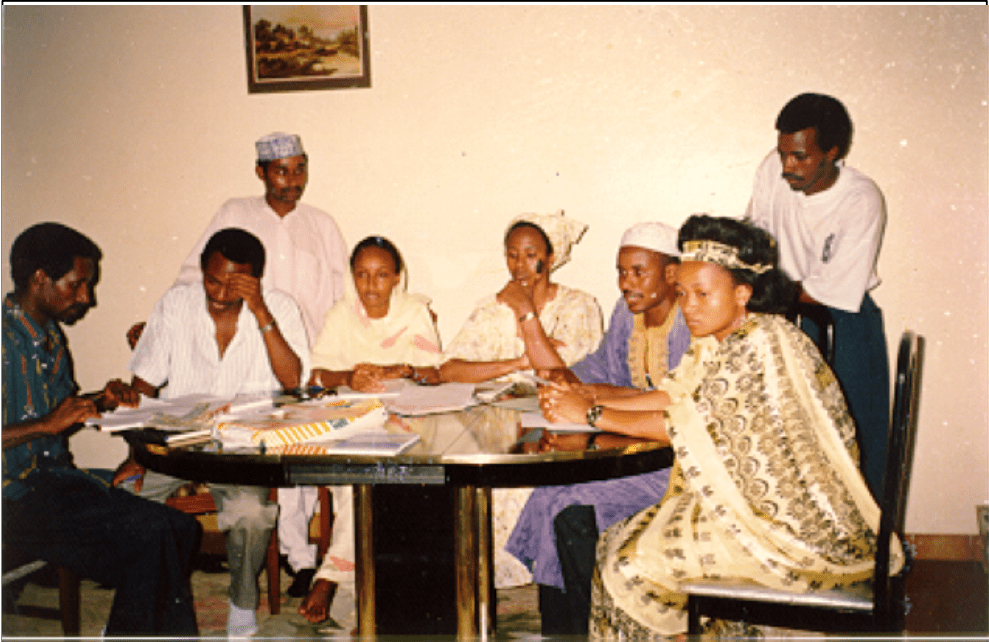
Just as it is a general role that almost everything must have a beginning, it is also true that if we put everything together, one idea brings us to the next. So the existence of the Mbororo Social and Cultural Development Association of Cameroon – MBOSCUDA is, therefore, no accident. Everything put together, it is the result of the efforts and hard work of some individuals to address and find possible solutions to the complex, if not, contradictory issue of “Social Development” in relation to the Mbororo Pastoralists within the framework of their own culture and lifestyle.
The idea of MBOSCUDA grew out of informal and largely unplanned discussions of some (mostly educated) Mbororo youths (mostly students) from different backgrounds who (perhaps inadvertently) set out to ask themselves what could be done with, what one of them then, rightly or wrongly called Mbororo Backwardness. (App.I). For most of them it was the question of asking oneself a number of questions. Who or what are we? Where do we come from? Where are we heading? (App. V) If left alone what will become of us as a people, our cattle herding culture and pastoral way of life? What can be done to improve our lives? Answers to these questions are difficult. Perhaps, even impossible to answer and it is not our purpose to do so here. But even a casual look at the realities convinced the youths on the need to do “something” about the situation. They also saw it as their responsibility to make this “something” happen (App. II).
However, one major obstacle to any collective venture was the lack of contact between people resulting in a lack of knowledge about what others could be thinking or doing to help themselves. But this alone could not deter initiative. Without any knowledge about each other and without contact with one another a number of associative movements started up in different regions almost about the same time. By 1987 one group that had started in Bamenda, (North West Province) met frequently (though informally) to exchange ideas and views. They formed the Fulani Social Development Association—FUSODA and wrote a number of papers (all unpublished), a Constitution and got themselves registered as a social gathering in the Sub-divisional Office of Bamenda. They also produce and issued out membership cards. This group had as major activity a savings and loans (njangi) venture and the Northwest Province as target area of operation. Among it’s most prominent animators were: Musa Ndamba (as group leader), Ibrahim Haman, Usman Haman, and Nuhu Jafaru (as secretaries), and Amina Haman (the lone female as Treasurer).
Another group started activities in Kumbo (still in the North West Province). They called themselves the Fulani Foundation of Cameroon—FUFOUCAM. They wrote to some people around the country, drew up a Constitution and published a paper: “The Fulani Foundation of Cameroon: Bridge to the Future” (App II) This group also went round consulting Mbororo people who could be interested in the idea. They had as major objective what they called “a collective fight for the economic, social and cultural liberation of the Fulani community”. FUFOCAM envisage the entire National territory of Cameroon as its target area of operation. It was lead by Sarli Nana, Yaya Umaru, Usmanu Sali and Gayeh Bakary.
A third group made up of University students, traders, government workers and professional drivers started in Yaounde (Center Province) in 1991. They formed the Mbororo Development Association—MDA, whose sole objective became the creation of a single Mbororo organisation. Among its most prominent actors were Bouba Ndoudi, Suley Isa, Fadimatou Dahirou, Halidou Abdulaye, Amina Assabe, Hawe Bouba, Musa Madaki, Nuhu Jafaru, Abdou Bello and others. And as if to confound conventional wisdom and tradition, it was headed by a woman—Hawe Haman. Unlike the first two groups in the North West Province, this group comprised people from different provinces or regions of the country, some of whom had affiliation to the first two groups. This posed a problem and as one guy (Bouba Ndoudi) was quick to point out:
We are not settled in one region of the country, neither do we have contact with others in other regions. So what kind of development are we talking about—of regions or of a people?
Bouba Ndoudi
CONTRADICTIONS
This geographical factor was a crucial problem. It made any attempt at answering the question “What kind of development?” almost impossible. In an attempt to find an answer, it was agreed that it will not suffice to try to make very clear definitions of what the group called “la Question Mbororo” alone and drawing up solutions. If there was anything to be done and if it were to work, then it will need all the available human and material resources that the community could produce. And if the initiative was to get anywhere further than mere words and paperwork, it had to involve the grassroots in all parts of the country.
This group in consultation with the promoters of the other groups, decided to sponsor and host a large meeting in Yaounde to discuss these issues. This meeting was to involve members of all three groups and any other person who might be interested in the formation of a Mbororo Organisation. They, accordingly issued what they regarded as a clarion call “A tous les Mbororo du Cameroun” (App. III). They were fully aware of the risks involved and the likely repercussions in the event of failure and their worries were not unjustified.
A fussy and vague distrust existed among the different actors with each group showing a tenacious hold to its ideas and methods. Matters were further complicated by the mutual (but yet undefined and un-dispelled suspicion of each other or of the various clan lineages (lenye) that still today reign supreme within the Mbororo community. A feeling of general fear and uncertainty shrouded the whole venture. The meeting was finally scheduled for May 1992 in Yaounde after two postponements and hesitation from some people. Some delegates stayed in their hotel and went back home without attending the meeting because they wanted to see a Government document authorising the meeting! The precarious political situation of the 90s was not conducive for any innovative initiative especially from an underprivileged and despised people like the Mbororo.
Right from the beginning it was evident that forming a Mbororo Organisation though a lofty idea, and for all its raison d’être has its own inherent problems and contradictions. Addressing the question of Mbororo development meant confronting a two-fold and complex problem:
- It means changing a lifestyle without destroying the underlying culture and customs of the people that have helped to sustain it for centuries. What do we preserve of our past and what do we change of it to adapt to our constantly changing environment and circumstances?
- It also means challenging the nature and balance of power relationships that have helped to marginalised and sidelined the Mbororo people without confronting these same repressive and retrogressive forces, which still today, strive to maintain the status quo.
On the one hand, the problems facing the Mbororo community are many and complex. The Mbororo community lacks the tradition of communal organisation. It also has few literate/educated people, who could work for an organisation and no one member of the already formed groups had any training in group or NGO management. On the other hand, as always happens around the world underprivileged and indigenous peoples often fall prey to the exploitation of “dominant society”. Any initiative by the latter, therefore, that sought their right to selfdetermination and that invariably affects the interests of influential and powerful patrons of society, is likely to meet with repression. And this is exactly the case with the Mbororo people and MBOSCUDA today with the likes of Baba Ahmadou Danpullo of Ndawara ELBA Ranch (App VI).
COMPROMISES
However, the need to do something in the right direction, the need to work for what you are and what you want for yourself, far outweigh the thought of all difficulties. The Yaounde Constitutive Assembly, laid the groundwork for MBOSCUDA in a two days intense meeting that saw heated and often emotional debates on almost every aspect of its work. One major bone of contention was the choice between the appellations “MBORORO” and “FULANI”. Various definitions and descriptions of Mbororo and Fulbe were put forward in defense of the one against the other. However, the most monumental argument was, perhaps presented by Umar Buba Jeldu in favour of the “Mbororo” appellation:
Agreed, we are all Fulbe. But can any one in this hall tell me what is/was the selecting criteria for choosing the people sitting in this hall today? It is because we speak Fulfulde or have Pulaaku? Many other people do! No! It is because, so far, our lives and the lives of our forebears have been intricately and inseparably linked to the cow and cattle herding. And this is exactly what makes us, above all else, Mbororo!
This therefore, is the crux of the matter. Talking about “Mbororo development” meant addressing their relationship with cows and cattle herding tradition. This is a deciding factor to our identity as a people and was, the deciding factor to the nature, values, mission and objectives of a Mbororo Oganisation (App. IV).
The name “Mbororo” alone took more than six hours of strenuous and muscled arguments before adoption. But finally, on May 31st 1992, in the home of Alhadji Bouba Ndoudi, less than 500 meters from the Presidency of the Republic and in a hall jammed to full capacity, with people on the brink of tears (from emotion) and collapse (from exhaustion), and under the able leadership and guidance of a woman! an assorted assembly of some 200 Ardobe (Mbororo Community Leaders), men, women and youths solemnly declared their commitment to the MBOSCUDA initiative. The emotion and solemnity of the moment was captured in the memorable words of (once again!) Umar Buba Jeldu, as he declared his submission with a trembling voice and at the brink of tears:
I have given myself because first, it fits (dum fotti) second, it’s beautiful (dum bwudi) third, it’s heroic (dum hilni) and fourthly, it’s sorrowful (dum yurmi) to sacrifice for what you are
Umar Buba Jeldu
… AND THE SEARCH FOR GREENER PASTURES?
Now, let’s pull the threads together. Even then, it was abundantly clear to all participants that the MBOSCUDA initiative was an uphill task that needed foresight, tact, perseverance and might in realising its set goals and objectives. A decade later, it has certainly come a long way and overcome many an obstacle but it is even more abundantly clear again that an even longer stretch still lies ahead. It may have lesser or more huddles to confront. We cannot know. But one thing we can be sure of, the future depends on the decisions and actions we undertake today. And this is really saying something. Nothing, in my own eyes, perhaps, best describes the Mbororo MBOSCUDA venture and its raison d’être than the words of my Filipino friend, Daniel Ocampo, who during the United Nations World Summit for Social Development held in Copenhagen Denmark (March 1995), wrote on a placard.
“Development is not only nice buildings and roads, it is giving the word HUMAN it’s proper meaning and satisfying its needs.”
THE FULANI COME TOGETHER CALL
Manuscript by Nuhu Salihu Jafaru
You need only take a glance around and see for yourselves: the number of Fulani hawkers that today monopolise the streets of our provincial capitals; the number of brilliant Fulani students who have become school drop-outs as a result of no finance or worse still lack of personal motivation; the number of jobless, financially uprooted Fulanis with no skill or training at anything at all; the just-a-handful Fulani literate or business men and civil servants who are in themselves having no binding unity or zeal for co-operation, and you will quite agree with me that there is no gainsaying to the financial and developmental estrangement of our people. Must we sit back, baffled by this dilemma and see the world hurdle pass us while we recede into darkness? Are we expecting Manna to fall from heaven to our rescue?
No! It is high time we put our heads together, and face today’s ‘struggle for survival’. For man’s chief preoccupation is still to survive and become a success in a society which is in the midst of the most challenging economic and political upheavals in the history of the world. One may ask, but who can save the situation? Yes there is. You can! Just by your little efforts and cooperation. What’s there to be done? Why. Yes, there is! Why not rally ourselves together, form an organisation, out of earnesty, fraternity that will cater for these needs or at least curb some of the excesses of ignorance and illiteracy?
There is no need underscoring the importance of such an organisation for our present plight speaks for itself. But rather let’s consider these questions; How will such an organisation come into being (existence)? How will it function and how will it be governed? These and of course more are to be answered before a cross-section of some of us as a starting point. And this task lays squarely on the young enlightened Fulani, in short, the Fulani youth. It is our place (and in fact no-one else) to take the advancing step and lay the foundation stone of Fulani solidarity. For as all it seems our parents or elders are either reluctant or ignorant of the importance of such an union or better still they cannot just come to think of it. Let’s go ahead and begin and I am quite positive that they will join and support full-heart. For as it stands now, all we need is a pivot around which to rotate and with such we will be heading to nowhere else but Fulani unity and welfare.
I am actually not the first to hint at such a union. Sumi Abdou when he was still schooling in Nigeria some years back attempted a first rally which never took place and of course due to the laxity and nonchalance that flows in our blood. Well now, the wind of change is blowing strongly and for good. For those who have eyes to see and ears to hear will now fully appreciate the nomadic wisdom of our forebears when they prophesied:
Mosuh’o Yaye badidhi Suh’O yay dayidhi
“One who does not gather his straying cows while they are within sight is fated to search for
his herd where it is not”
Suggested Agenda for the Union
1st Meeting:
- Meeting of those around town or who can effort to come.
- Discussions on union’s formation, criteria of / and membership, Union’s name etc
- Deciding a fix date of the meeting of all members and would-be-members.
2nd Meeting (At a convenient date and place)
- Formation of Union, Union’s charter outlining all rules and regulations.
- Elections as regards union’s leaders and management (criteria for qualification ofcandidates etc)
- Debates on general issues that may result as a consequence to the formation of the union…etc
Financing of the Union Finance is the point that is likely to develop into heated debate. Many of you, in fact, my guess is nine out of ten who will read this appeal as well as those of my other colleagues must have wondered at one point or the other as to where the finance of such an Union will come from. But there is. Far more than enough even!
The first area to be considered is the ‘Zagkat’ or the giving of arms (to the poor) which is, of course, Islam’s form of taxation. Well, here I am not only treading on forbidden grounds but also likely to face stiff opposition but am also prepared to listen as well as defend my stance. Zagkat as a tax is to be given to the needy, and are our own very people not the neediest of the needy? Long ago in Saudi Arabia (the birth place of Islam) Zagkat was collected by a recognised group without the interference of the property owners, and used as deemed necessary. It was(and may still be today) a matter for the collective. So what is there stopping us from the collectivisation of our own arms giving?
However, no need to stress us with mere debate. There are other sources for funds, which arenot mentioned but nonetheless, very important. One of such possibilities could be to levymembers.
N.B. These are only suggestions that must objectively be considered as having no binding power to be effected without having the full support of all, especially the grassroots. More so, they are subjected to close study, criticism and of course correction. For as it stands no one man’s ideas can go without flaw. I therefore invite you to take and reject what you would of it. I also throw the challenge to you. What are yours? I am interested to hear. I take your leave in the hope that I / we will hear from you because what you think and feel matters to the progress of our community. Mbengwi, February 19th, 1988
THE FULANI FOUNDATION OF CAMEROON – FUFOUCAM BRIDGE TO THE FUTURE
By Nana Sarli Sardou
The basic tools of human beings in their struggle to master their environment and their own “human nature” are: reading, writing and a facility with numbers – the “three Rs” of old-fashioned elementary school. So the idea of coming into an association like FUFOUCAM istimely and the reasons are numerous. In this write up I will attempt to give some reasons for the formation and the possible objectives that we will be trying to attend.
First and foremost from the social stand point, it is necessary to fulfil the social purpose of our education. By this I mean making education an end and not a means to an end. The social purpose of education to me is the quality that enables persons to see the problems of their communities in relation to their own personal problems, and to acquire such skills in mental and physical activity as will permit them to pursue those personal and social ends jointly and efficiently. This is contrary to what Plato thought – that education makes people “see things whole”, for this gives one the impression that education is a means to an end and not an end in itself. This goes hand in hand with some amount of moral integrity and religious values.
An insight look into civilisation reveals that the distinguished characteristic of a true civilisation is the “moral integrity” of its society. For the survival of a society as a whole and communities in particular, old-fashioned ideas of “right” and “wrong” and adherence to moral standards may prove to be more valuable than sociological explanations. According to Dr. Salam, there are seven hundred and fifty (750) verses in the holy Quran which exhort the believers to study nature and reflect on how to make the best use of reason in their search for ultimate truth. Allah has endowed man with the capacity to use his intellect, reflect upon things, and express his ideas by speech and in writing (see Holy Quran “Ar-Rahman” –The Compassionate LV: 3-4). When talking about all these, one needs at least a social structure through which “educated” members can achieve their goals.
If any kind of “ideal” social structure is to be attained, meaning a structure that will enable the members of the community to realise their potentials and live as happy a life as is reasonably possible, then after conceiving the ideas, care must be taken as to get a solid foundation—reflect and make the best use of reason. Most of all, someone must start somewhere.
The above mentioned points and many more inspired me to start somewhere and we came up with the FULANI FOUNDATION OF CAMEROON – FUFOUCAM, a socio-cultural and development association for and by the Fulani Community of Cameroon (Cattle Fulanis– Mbororos / Akus).
OBJECTIVES:
- Revamp, document and preserve the culture of the Fulani Community.
- Integrate the Fulanis into existing socio-cultural structures.
- Act as a bridge between the Fulani people and the society in development matters.
- Act as the ears, eyes and mouthpiece of the Fulani Community strictly as a social service.
- Unite the Fulani people to give them a sense of belonging.
The foundation shall pursue other activities as deemed necessary as time goes on. The present generation may not see the dire need for an association but those fortunate to live long and future generation will altogether swear by it!
Through Organisation – Development – Conservation, FUFOUCAM will perform the miracles. Culture is a civilization by its nature. Therefore the resuscitation, rehabilitation and conservation of the culture of the Fulani Community is a big necessity. At the time when we are talking about culture from various dimensions, a cultural identity for Cameroon for example can only be a “real” identity only if the various cultures of the over two hundred tribes (ethnic groups) are “real” themselves. The Fulani man who is said (from some sources) to have come from North Africa probably came from where civilization began (Egypt) and consequently has much to offer. One can rightly or wrongly say that there is a “gap” between the Fulanis and the society, which needs a “bridge”. Through this “bridge” (FUFOUCAM), we access Cameroon Society and even further. When going, we will take with us our “mirror” (which is our culture). Apart from dances, there are works of arts, traditions, traditional healing methods, ceremonies, rites and rituals, all of which can be of interest both to the Fulanis and the people that live outside our community. Harnessing of such resources and releasing them into the Cameroon society will be of importance. The FULANI FOUNDATION OF CAMEROON – FUFOUCAM will be the vehicle. The question as to how and where is eminent. But FUFOUCAM can make all these available through various activities.
Cultural Centres / Weeks held in Ardorates rotatively during which there shall be a variety of programmes and exhibitions, prizes (incentives) to excelling Fulanis in various aspectsof life. During such weeks the Ardorate in question is given particular attention in terms of development projects by community work.
- Literacy and education campaigns and projects will be carried out after studies and consultations with government and national and international organisations whose objectives fall within this line, NOMADIC EDUCATION programmes will be solicited for.
- Primary health care programmes will be sort for, including possible water projects incollaboration with the government and national and international organisations engagedin this field. Disinclavement through community road construction programmes will beencouraged.- Social and economic problems emanating from Cameroon’s land policy will be giventhrought and reflection and solutions to the much parroted farmer
- Grazier problem will been visage. We will try to do this by cooperating with government and other communite\ies, and acting as an intermediary. This will be done by proposing appropriate land / agricultural policies that can enable the farmers / graziers own and develop their own land with aid from government and with clear-cut boundaries. This will be strengthened by given the farmers / graziers some level of autonomy in solving their problems traditionally, too. Improvement of pastures and cattle, sheep and horse breeds will be solicited. FUFOUCAM will get involved in these because one cannot get an independent culture without development and organisation.
The ball is now in the court of the Fulani people, the administration and all Cameroonians of good will. You will discover the FULANI FOUNDATION OF CAMEROON right at your door. Welcome the newborn “bridge” and give us your moral and material support. This plan is not a sociological masterpiece nor is it an academic exercise but a simple plan, which I hope will at least inspire people to do something for themselves. A journey of a thousand miles starts with a single step.
ASSOCIATION POUR LE DEVELOPPEMENT DES MBOROROS
BP 1086 YAOUNDE (BUREAU PROVISOIRE)
M. Halidou Abdoulaye
Le Vice President
A TOUS LES MBORORO DU CAMEROUN
Nous, membres de la communauté Mbororo de Yaoundé, regroupes au sien d’une structure provisoire dénommée “MBORORO DEVELOPMENT ASSOCIATION” réunis ce jour, lanÇon un vibrant appel a tous les Mbororo du Cameroun, pour individuellement ou collectivement, nous puissiont penser, réfléchir à la solution de ce que nous pourrons appeler la ‘Question Mbororo’ aujourd’hui. En effet, depuis des générations, l’homme Mbororo a participé de manière indéniable et constante au dévéloppement de ce pays en pratiquant l’élevage qui est un secteur important de notre économie et en s’acquittant de tous ses devoirs civiques.
En revanche, force est de constater qu’il est ignoré, isolé et à la limite écarté de tout progrès social impliquant le Camerounais :
- Au plan éducatif, l’analphabétisme a atteint dans les milieux Mbororo des proportionsinégalables
- Au plan de la santé, les structures sont presqu’ inexistantes dans ces milieux
- Au plan administratif, ses organisations traditionnelles ne sont pas intégrées
- Enfin, géographiquement, l’espace pastoral dans lequel il a toujours vécu s’amenuise dejour en jour.
Tous ceci a contribué à la dégradation de sa personne et de sa tribalité
Aussi, il est probable que chacun de nous, à un moment de sa vie s’est posé la question du devenir de l’homme Mbororo. C’est ainsi que des solutions individuelles ou collectives ont été préconisées à différents niveaux. C’est le cas des départements de la Mezam et du Bui où existent déjà des organisations de défense des intérêts Mbororo.
Toutefois, vous conviendrez avec nous qu’au regard des problèmes ci-dessus posés, ces types d’organisations ont incontestablement des limites. Il est donc indispensable qu’une structure d’envergure nationale regroupant tous les Mbororo du Cameroun, en vue de la défense de leurs intérêts spécifiques voie le jour. A cet effet, le Bureau Provisoire du « Mobroro Development Association » vous invite à assister massivement à la prochaine Assemblée Générale Constituante dont la date et le lieu vous seront communiqués ultérieurement.
La contribution, les suggestions de chacun de vous sont vivement souhaitées.
THE SEARCH FOR GREENER PASTURES
By Nuhu Salihu Jafaru
A lot has been written on pastoral nomadism where it is reduced to an economic activity. As a mode of production, some people condemn it as outmoded and unprogressive. In the face of stiff competition from commercial range management, state or government neglect, increasing land disputes and dwindling animal herds others have predicted its demise as a foregone conclusion. Everywhere pastoralist societies are having a rather rough time. Well meaning and technically sound projects concerning them continue to fail to produce the desired results. And this because, no one wants to see the rationale behind the peoples pastoralist way of life.
For the Mbororo people, for example, pastoral nomadism is not only a mode of production but also a way of life with a culture and traditions to buttress and sustain it. For them, cattle herding is a life-wire, their identity and measure of self-worth, the essence of well-being, the meaning they find in their whole social existence—the very fabric of society.
For generations they have wondered across state borders with their cattle herds. The priority at all times and in all places has always been to preserve and protect their cattle herds. Thus, the constant flights from all problems and all outside influence. Over the years they have developed a culture of otherness – a nomadic aloofness that has more than just meets the eye.
They have built and developed an intimate personal relationship with their cattle that cannot be reduced to economic commercial terms alone. The cow is a partner in life, a companion and member of the household with an equal share in the joys and sorrows of the family. Each cow has an individuality. Its milk a distinctive taste. Its physiognomy and personality are recognised even in its off spring. Its habits and preferences a matter of concern to the family just like it were those of a child. Its death or removal from a herd becomes a great loss to the family especially its immediate “owner” who at times becomes inconsolable with grief.
Today, with increasing sedentarisation, changing lifestyles and shifting value systems, the Mbororo pastoralists are confronted with difficult choices. An outsider would hardly understand why for example a Mbororo man finds it difficult to sell a cow to sponsor a child in school. Why he would not like to “imprison” his cows inside a well-constructed ranch
fence, where he would only know them by their tag numbers. The much talk about changing farming and production systems (zero grazing for example) promoted by government and development agencies will continue to make no sense to the Mbororo until it can be reconciled with what they have learnt over the years and value so much. And this is not so much a change of lifestyle as it is a change of attitudes, perceptions and age-old habits.
Whatever the case, and whether or not the Mbororo are able to retain their cattle and pastoral lifestyle, this emotional attachment to the cow will continue to influence their lives both as individuals and as well as a community. And the search for greener pastures will continue to be their most cherished self-determining option.
TU ES PEULH ?
D’OU VIENS – TU ?
OU EST-TU ?
OU VAS-TU ?
Telles sont les trois questions fondamentales, parce que :
Il faut savoir d’ou l’on vient
Pour savoir qui l’on est,
Il faut savoir qui l’on est
Pour savoir ce que l’on a à faire.
Si tu es Peulh, si tu te sens Peulh, si tu as du sang Peulh, si tu es de coutume Peulh, si tu aimes la tradition Peulh, si tu veux connaître et faire connaître la civilisation Peulh,
P.E.U.L.H
Programme d’Etude pour l’Unité de la Langue et de l’Histoire
Alors, lis les pages suivantes.
D’après un document datant de 1972, les Peulhs représenteraient quelque six millions de personnes reparties entre la Mauritanie, le Sénégal, La Gambie, la Guinée, le Mali, le Burkina-Fasso, le Bénin, le Niger, le Nigeria, le Cameroun, le Tchad, le Soudan etc… On trouve sur toute l’étendue du territoire, des peintures rupestres (sur rocher) datant de 5000 a 1000 ans avant notre ère et représentant des personnages du même type physique que les Peulhs actuels. Mais la constitution du peuple Peulh proprement dit s’est faite sur le territoire de l’actuel Sénégal, seulement aux environs du 14eme siècle, par métissage entre des Berbères Mauritaniens à la peau claire et des peuples nigritiques de Gambie a la peau foncée. Du degré plus ou moins grand de métissage provient la différence de couleur entre les individus et les clans. Ainsi, les Bororos sont en général presque blancs tandis que la classe des Laobe est presque noire.
De la provient l’aspect caucasien des Peulhs confirmé par des légendes vivaces qui les font venir d’Asie, disent les uns, de l’Egypte ou de l’Ethiopie, disent les autres. Ce que confirme la migration des Caucasiens, population blanche, qui sont venus du Caucase via l’Egypte et l’Ethiopie pour peupler l’Afrique du Nord en contournant le Sahara aussi bien par le nord que par le sud. Mais le fait que les Mauritaniens pratiquaient l’Islam a fait dire que «les Peulhs sont nés musulmans». Et c’est effectivement a partir de ce moment la que les Peulhs entrent dans l’histoire comme des conquérants des la Foi.
Ayant emprunté (et déformé) le nom que leur donnent les Wolofs, les Français dénomment Peuls – jadis orthographie Peulhs – ceux qui s’appellent eux mêmes Fulbe (Singulier : Pullo), que les anglo-saxons, après les Haoussas, moment Fulanis et a propos desquels les auteurs allemands parlent de Fulas ou de Ful. D’où les grandes différences de dénomination dans les publications et dans parlers ou on trouveaussi bien : Peulh, Peuhl, Peule, Peul, Fellatas, Fellanis, Foulani, Foulah., Foulbe, Foules…..
A partir du 15eme siècle, des sources nombreuses indiquent une extension des Peulhs vers le sud et surtout vers l’est, dans des conditions au reste mal connues, mais certainement liées a la fois aux vicissitudes politiques internes et externes et a la quète des pâturages. Des le 17eme siècle, ces migrations amenèrent les Peulhs à occuper une bonne partie de leur habitant actuel, mais sans y exercer, en général la prééminence politique. Les deux siècles suivants, au contraire, virent se constituer à leur profit plusieurs états important, en Guinée (18eme siècle), au Mali et surtout au Nigeria–Cameroun (19eme siècle) ; Etats qui, vaincus et soumis par la conquête européenne, n’en devaient pas moins subsister à des degrés divers, pendant la période coloniale et parfois au-delà.
L’Islam constitua le moteur de ces transferts de force entre les Peulhs et leurs voisins, transferts qui résultèrent de «guerres saintes» menées a l’appel de personnages religieux, Karamoko Alfa en Guinee, Osman dan Fodio au Nigeria, Sekou Ahmadou et Hadji Omar au Mali, contre des Suverains musulmans déclares « infidèles » ou des chefs et des populations animistes. La plus caractéristique est l’épopée du chef charismatique Osman dan Fidio. A la fin du 18eme siècle, l’Islam était en déclin. La nécessite de redonner forme a cette foi décadente incita ce dernier à orienter le potentiel jusque là inutilisé du peuple Peulh. Sous la bannière du Jihad il réussit a enrôler une grande partie des Peulhs dans une armée avec laquelle il édifia un empire qui se maintien jusqu’à l’arrivée des Britanniques au Nigeria. Ses descendants demeurent encore aujourd’hui de puissants Emirs à Sokoto, au Nigeria. Les Peulh se subdivisent habituellement en quatre clans : les Toroobe, qui ont fourni les chefs de chacune des villes conquises par les Peulh ; les Fulbe siire ou « Peulhs de la ville » ; les Fulbe n’ai ou Fulbe ladde « Peulhs vachers » ou « de la brousse » ; les Bororo, pasteurs nomades, qui ont conserve le plus fortement les traditions.
Foncièrement individualistes et toujours prêts à fuir devant toute contrainte, les Peulhs n’ont longtemps admis, en fait d’autorité, que celle qu’exerçait de façon très lâche le patriarche du clan. Vivant de façon très libérale, ils ont presque toujours cohabités avec des population autochtones et hétérogènes. Des l’enfance, ils apprennent a pratiquer les valeurs fondamentales qui forment le pulaaku : hakkilo « discernement :, munyal « résignation », semteendé « réserve ». Les principales qualités qu’ils cultivent sont l’intelligence, le goût de l’organisation, le respect de la parole donnée et aussi la beauté physique de l’homme et des animaux qui sont sa raison de vivre. C’est pourquoi, les trois centre d’intérêt des Peulhs sont tout d’abord leur aspect physique, puis leur bétail et enfin leur famille et leur relation de clan. Souvent, lorsque les Peulhs ont voulu enraciner leurs conquêtes, ils ont passé des accords avec les populations indigènes stipulant, par exemple, que le successeur serait obligatoirement issu d’un chef Peulh et d’une mère autochtone. Ou alors ils laissaient en place le chef local lorsque lui et ses ressortissants se convertissaient à l’Islam.
Parce qu’ils ont continue a vivre, même sous la colonisation, en dehors des schémas occidentaux et des langues européennes utilisées, cela a entraîne une certaine stagnation et inadaptation au monde moderne. Trop souvent analphabètes, ils ont seulement continue a utiliser leur langue propre, le Fulfulde, ou une autre langue africaine d’emprunt, comme le haoussa. Ou alors ils n’ont connu que l’école coranique et l’étude de la religion. A l’heure actuelle, du fait de leur dispersion, les Peulhs ont perdu tout sentiment de leur unité et de leur identité.
Il est temps maintenant que tous ceux qui se sentent Peulhs recherchent leur identité et sachent ce qu’ils sont. Le grand mouvement doit commencer pour étudier, grâce à l’ethnologie, l’histoire, la langue et la civilisation, d’ou viennent les Peulhs, ce qu’ils ont fait et ce qu’ils sont. Tel est le moteur qui, par l’alphabétisation et la scolarisation, permettra l’adaptation des Peulhs a notre monde et a notre époque. Cela ne pourra se faire qu’après la reconquête de l’unité et de l’identité, puisqu’il faut savoir qui l’on est pour savoir ce qu’on a à faire.
Il est possible des a présent, avec des moyens modestes, de constituer dans un ou plusieurs centres, des banques de données informatisées bibliographiques, ethnologiques, historiques et littéraires (en fufulde, en anglais, en français, en allemand, en arabe), en même temps que des renseignements d’état civil permettant à chacun de reconstituer sa généalogie.

“In the heart of Mayo Banyo, the Mbororo people found strength in unity, resilience in adversity, and a voice in their culture. The story of MBOSCUDA is a testament to the transformative power of community and the unwavering spirit that can shape a brighter future.”
Ardo Abdoulkadi
 MBOSCUDA - Mayo Banyo Chapter